Your Looks Are Our Concern…
Moles are a normal part of most people’s skin, and the vast majority are harmless. Still, changes in a mole’s size, shape or color can sometimes signal something more serious. At Reno Sparks MedSpa in Reno, NV, Dr. Calvin Van Reken offers cosmetic mole removal and skin cancer screening, so patients can address moles they don’t like the look of and catch anything concerning early.
What Are Moles?
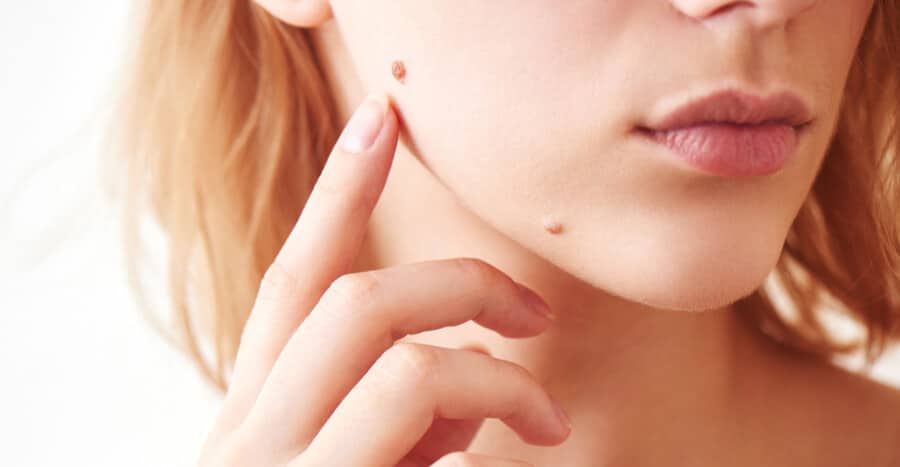
Moles on the skin are common and most of them are harmless. It is wise to monitor any moles that you have to ensure that they don’t become cancerous. Brown moles are formed by small bunches of pigment cells that are grouped together and can appear in many different colors. Reddish or pink moles often have a higher-than-normal number of blood vessels in them.
Most moles are brown, black, or flesh-colored & can appear on your face & other body parts.
When Should A Mole Be Evaluated?
There has been a significant increase in the incidence of melanoma in recent years due to a combination of factors, including the depletion of the ozone layer, tanning bed use, genetics, and improved detection methods, and malignant melanoma is the deadliest form of skin cancer. When caught early it is highly curable. When caught late it is often fatal. It is wise to get any moles or spots checked on a regular basis.
Skin cancers are especially common in the following types of patients:
- Those with prior skin cancer.
- Those with a family member with skin cancer.
- Light colored skin, usually with blue or green eyes.
- Those with a prior organ transplant, such as a kidney transplant.
- Those with obvious sun damage (freckling or pigmented sun spots on the skin).
- Those with prior sun exposure such as farmers, sun worshipers & outdoor workers.
- Those who grew up or currently live in areas with heavy ultraviolet rays such as deserts, mountains, sunny areas or who have spent a lot of time south of the border.
A healthy mole will generally be flat or slightly raised, and will be even in color and texture and most have a diameter of under 6 mm.
We are more likely to biopsy moles and look for cancer if one or more of the following characteristics are present:
- Asymmetrical appearance
- Irregular borders to the mole
- Reddish or purple color or mixed colors in the mole
- Diameter in the widest area greater than 6 mm
- Bleeding, scabbing or failure to heal, including ulceration
- Changing of the mole: including color, growth, ulceration or getting a new halo around it
- The mole looks much different than other moles on the same patient (often called an ugly duckling mole)
If you notice any changes in your moles or have one or more of the mole characteristics above be sure to see a doctor immediately as it could be skin cancer without your realizing it.
Cosmetic Mole Removal Options
We Offer Mole Removal Services Without Stitches or a Scalpel
You can get your moles surgically removed for cosmetic reasons. Calvin Van Reken, MD has extensive experience in mole removal using minimal invasive surgical techniques with laser technology, curetting and radiofrequency using the Ellman Surgitron machine which typically produce minimal scarring. No stitches are used with these techniques and most often no scalpel either. Multiple techniques are employed depending on the type of mole or skin lesion.
Radiofrequency
Raised moles with smooth borders of any color are commonly removed with Radiofrequency Mole Removal using the Ellman Surgitron mole removal device by Dr. Van Reken. The device uses a fine radiofrequency wire to gently ablate the raised tissue, layer by layer, until the mole is level with the surrounding skin. Because the energy seals tiny blood vessels as it works, bleeding is minimal and no stitches are needed.
Our videos below nicely demonstrate this “no scalpel, no stitches” technique.
Curetting
A second type of mole, or raised lesion, is called a seborrheic keratosis (also called dermatosis papulosa nigra), usually comes in a group of lesions, often on the face or thorax. The actor Morgan Freeman has many of these seborrheic keratoses on his face.
These are removed with a nifty technique called curetting. Curetting is a technique in which a small, spoon-shaped instrument called a curette is used to gently scrape the raised lesion away from the surrounding skin. The procedure itself is quick; recovery involves a short healing period.
This is a high-satisfaction procedure with a bit of downtime and then lasting cosmetic results. These are common on the face, often in darker-skinned individuals.
Laser Technology
For certain moles and pigmented lesions, Dr. Van Reken may use laser treatment as an alternative to radiofrequency or curettage. Laser mole removal targets the mole’s pigment or tissue with a concentrated beam of light energy, breaking it down layer by layer while leaving the surrounding skin largely undisturbed.
This approach is often well suited to smaller, more superficial moles, particularly those in cosmetically sensitive areas like the face, where precision and minimal disruption to nearby skin are top priorities.
Mole Biopsy and Skin Cancer Screening
More troublesome moles with some suspicion of skin cancer are handled differently. When a mole shows any signs of concern, Dr. Van Reken performs a biopsy to determine whether it is benign or cancerous. A few different biopsy methods may be used:
Shave Biopsy
Sometimes we take a small sample with a shave technique. Shave techniques are popular as when the mole is benign, it often looks much better after the biopsy and without a large cut. We then use the Ellman Surgitron machine to smooth out the edges of the biopsy so it is cosmetically appealing.
Punch Biopsy
For darker moles sometimes we’ll do a punch biopsy. This technique uses a small, circular cutting tool to remove a full-thickness sample of skin, including the epidermis, dermis, and a portion of the tissue beneath.
Standard Excision
Sometimes standard cutting and suturing is done, especially for noncosmetic areas like the back. This technique removes the entire mole along with a small margin of surrounding tissue, then closes the area with sutures. It is often used when a mole needs to be fully removed for diagnostic purposes, or when its size or depth makes other techniques less suitable. Healing takes somewhat longer than with no-stitch methods, but standard excision provides complete removal and allows for a more thorough tissue evaluation.
What to Expect During Your Mole Removal or Skin Cancer Screening
At Reno Sparks MedSpa, your visit is designed to be thorough, efficient and tailored to your skin’s needs. Here is what you can expect throughout your appointment:
Consultation
Your visit begins with a conversation about any moles or spots you’re concerned about, as well as your skin cancer history.
Skin Examination
Dr. Van Reken performs a hands-on evaluation of the mole in question and a broader check for other spots worth attention.
Dermoscopy (If Applicable)
For moles with uncertain features, a dermatoscope may be used to magnify and closely examine the pigment pattern beneath the skin’s surface.
Biopsy (If Needed)
If a mole shows suspicious characteristics, a small tissue sample is taken using a shave, punch, or standard excision technique.
Mole Removal
For moles removed cosmetically, or once a biopsy is complete, Dr. Van Reken uses radiofrequency, laser, or curettage to remove the lesion with minimal scarring.
Recovery
Before you leave, you’ll receive clear aftercare instructions and guidance on when to expect results or a call regarding biopsy findings.
Mole Removal Before and After
Visit our Photo Gallery to see our before-and-after photos!
Frequently Asked Questions About Mole Removal and Skin Cancer Screenings
Is mole removal painful?
Most techniques use local anesthesia, so discomfort during the procedure itself is minimal. Patients typically feel a brief pinch or slight pressure as the numbing agent is applied, and little to no sensation afterward as the mole is removed. Once the anesthesia wears off, the treated area may feel mildly tender or sensitive for a day or two, similar to a minor scrape, but this usually resolves on its own without prescription pain medication.
How long does recovery take?
No-stitch techniques such as radiofrequency, laser, and curettage typically heal within 1 to 2 weeks. Standard excision, since it’s closed with sutures, may take a bit longer for the area to fully heal.
How often should I have my moles checked?
This depends on your individual risk factors. Dr. Van Reken can recommend a personalized screening schedule based on your skin type, history and any moles that need monitoring.
How long does it take to get biopsy results?
Biopsy samples are sent out for laboratory analysis, and results are typically available within 1 to 2 weeks. Dr. Van Reken’s office will follow up with you once results are in.
Can a mole grow back after it’s removed?
A fully removed mole generally does not return. In some cases, particularly with shave techniques, a small amount of pigment can remain and become visible again over time, which is something Dr. Van Reken can address at a follow-up visit.
Why Choose Reno Sparks MedSpa For Mole Removal and Skin Cancer Screenings?
Dr. Calvin Van Reken brings decades of clinical experience to Reno Sparks MedSpa, where he specializes in mole removal and skin cancer screening. He is board-certified in internal medicine and geriatrics, and his peers have twice named him one of the Best Doctors in America®, a distinction earned by fewer than 1% of physicians nationwide. Since developing a focused interest in skin and cosmetic care in 2006, he has pursued ongoing hands-on training in laser therapy, injectables and skin lesion treatment.
That same commitment to patient care extends across the practice: Reno Sparks MedSpa was voted “Best Med-Spa” in the 2025 Best of Sierra Nevada awards, a Silver Winner recognition presented by the Las Vegas Review-Journal.
Schedule Your Skin Care Consultation Today For Mole Removal
If you have a mole you’d like removed for cosmetic reasons, or one that concerns you, don’t wait to have it checked. Dr. Van Reken and the team at Reno Sparks MedSpa in Reno, NV can evaluate a routine screening, a recently changed spot or a mole you’ve simply wanted gone for years. An evaluation now takes just a few minutes and can catch a changing mole well before it becomes a bigger concern.
To schedule a skin care consultation or mole removal evaluation/skin cancer screening with Dr. Van Reken here at the Reno Sparks MedSpa, give us a call at 775-571-4665 or visit the contact us page.
Powered by Crystal Clear Digital Marketing Reviews